The Factors Shaping the Future of Physical AI

Math Becomes the Engine of Robotics
The next major leap in robotics will come from math, not hardware. Today’s robots are largely reactive, responding to inputs in real time. The next generation will anticipate outcomes before acting.
Emerging mathematical techniques like dual numbers and jets are reshaping how change is modeled. They capture not only motion, but how that motion propagates through an entire system, enabling faster optimization, richer scenario planning, and more adaptive control.
This makes it possible for robots to evaluate path adjustments or run multiple “what-if” scenarios in milliseconds. While these approaches are still mostly confined to research, they represent a natural evolution in how derivatives and system behavior are computed—and their potential impact on robotics is significant.
Robots Evolve from Isolated Units to Learning Teams
Imitation learning is set to become a defining capability in the next wave of automation. Today’s robots largely operate as isolated units, relying on centralized control or fixed programming.
The next shift will enable robots to learn from humans and from each other, forming adaptive teams that share behaviors in real time. Building on early research and existing fleet coordination, imitation-learned models will allow robots to coordinate, adapt, and reconfigure workflows without rigid scripts.
As communication, safety, and orchestration tools mature, imitation-driven collaboration will move from pilot projects to real deployments, transforming robots into cooperative, continuously learning systems.
Task-Specific AI Replaces General-Purpose Platforms
Manufacturers are moving away from generic AI platforms toward task-specific AI built for individual processes such as welding, sanding, inspection, and assembly. These vertical AI systems come pre-trained and pre-integrated, delivering measurable gains from day one and enabling automation in tasks once considered too variable or complex.
Welding is already a leading example, with AI-driven vision, seam tracking, and parameter optimization reshaping the process. Similar advances are now extending to more dexterous tasks like assembly, fastening, and intricate handling, where AI helps robots manage variability in parts and workflows.
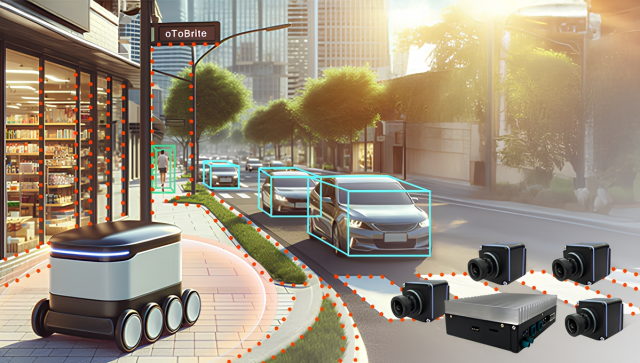
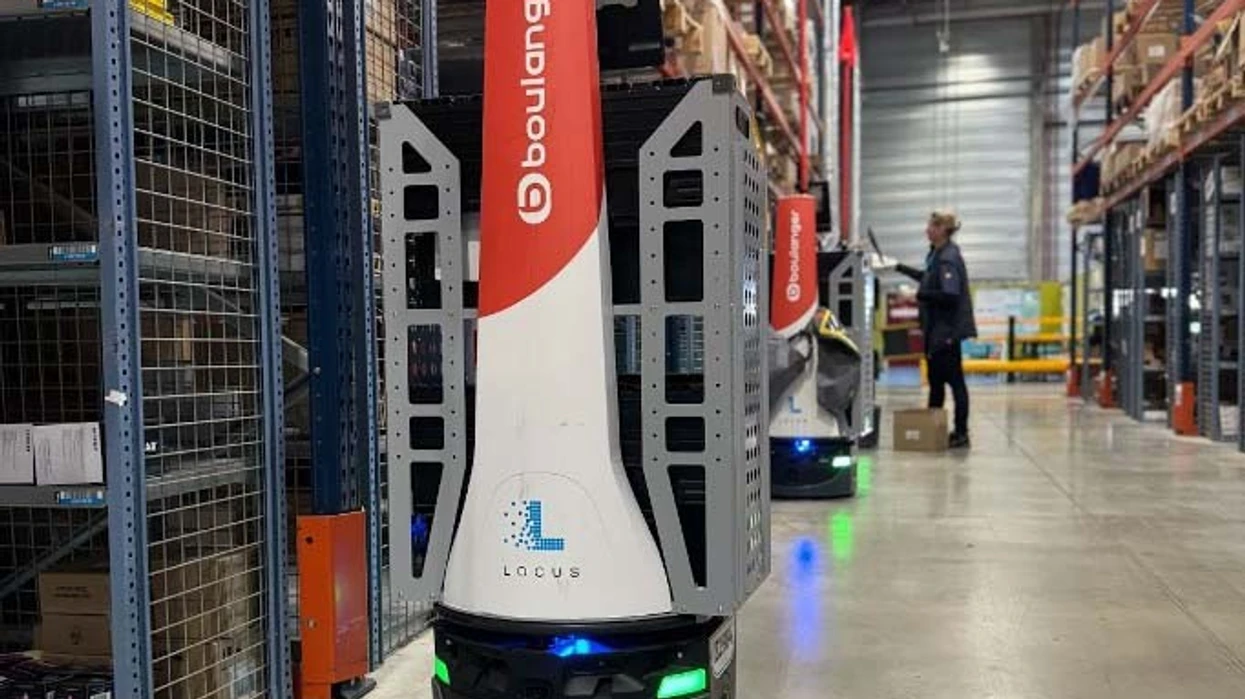
Logistics has seen rapid progress as well, with AI-powered robots performing complex pick and stow operations at scale. Next, these investments are expected to expand into retail, pushing robotic automation closer to everyday environments.
Robot Data Becomes a Scalable Asset
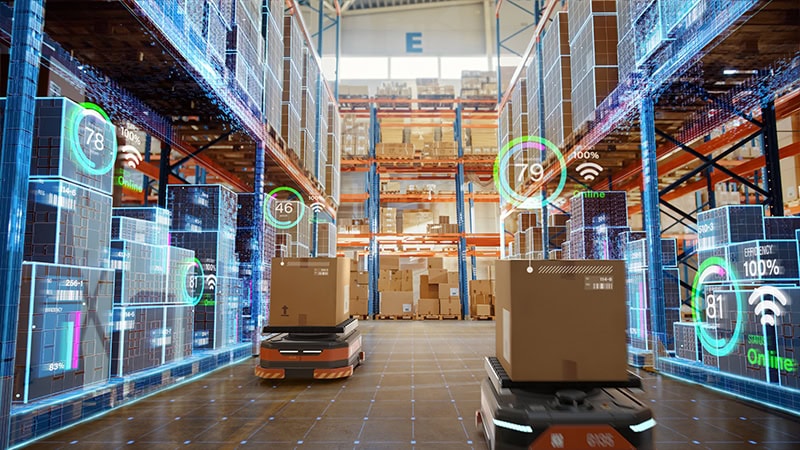
The next shift in robotics will be driven by how data creates value. Today, most robot data stays on the edge for privacy and performance, limiting its use in training smarter AI.
Secure, opt-in data exchanges will allow anonymized performance data to be aggregated and shared with strong safeguards. Insights from processes like welding or sanding can power better models for defect detection, predictive maintenance, and adaptive control.
By converting raw telemetry into structured, privacy-preserved insights, manufacturers unlock new revenue and continuous improvement, while customers gain AI trained on real-world conditions—creating a cycle where every robot makes the next generation smarter.
References
www.therobotreport.com